What Is a Series LLC and Which States Allow It?
A series LLC creates separate liability compartments under one entity. Learn which states allow them, what they cost, and the risks most guides skip.
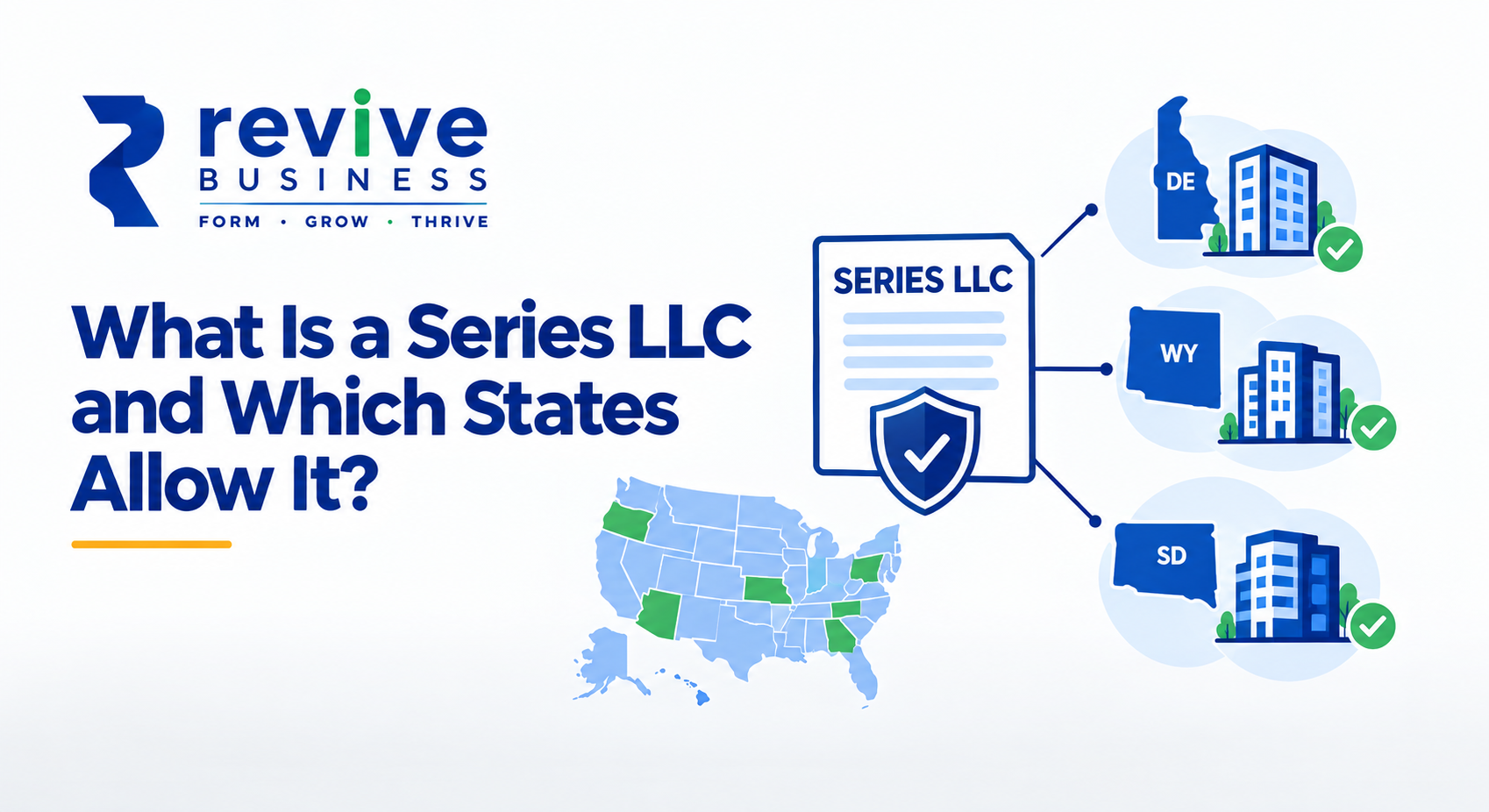
A series LLC is a single limited liability company that can create internal divisions, usually called series or protected series, each holding its own assets and liabilities. The idea is that a lawsuit against one series cannot reach the assets held in another, even though all of them sit inside one entity with one state filing.
Delaware created the structure in 1996 and it has spread to roughly twenty states since. The appeal is straightforward: separation resembling multiple LLCs at a fraction of the filing and maintenance cost. For a real estate investor holding eight properties, the difference between eight LLCs and one series LLC with eight series can run into thousands of dollars a year.
The complication is that the structure carries real uncertainty that most guides mention briefly and then move past. This one covers both sides properly, because whether a series LLC is a good idea depends almost entirely on the parts people skip.
How a Series LLC Actually Works
You file once with the state to form the parent LLC, using formation documents that include specific statutory language authorising the creation of series. That language matters. A standard LLC cannot create series retroactively without amending its formation documents.
From there, the process varies by state. In Delaware, series are created internally through the operating agreement with no separate state filing at all. In Texas, protected series similarly require no state filing, though registered series, which receive public recognition and can obtain their own certificate of good standing, cost $300 each to file. In Illinois, each series requires a Certificate of Designation filed with the state at $50 per series.
Whatever the filing mechanics, the internal requirements are consistent and non-negotiable. Each series needs its own separate bank account, its own books and records, its own accounting, and clear documentation of which assets belong to it. Assets should be titled in the name of the specific series rather than the parent. The liability separation depends entirely on this discipline, and a series LLC maintained casually offers considerably less protection than the structure suggests on paper.
Which States Allow Series LLCs
Worth being upfront about something here: published sources disagree on the exact count, with figures ranging from fourteen to more than twenty depending on how the source treats jurisdictions that recognise series formed elsewhere versus those that permit domestic formation. Statutes have also changed recently, with Florida and West Virginia both adopting series legislation effective in 2026. Verify the current position with the Secretary of State in any state you are considering before filing.
The jurisdictions commonly listed as permitting series LLC formation include Alabama, Arkansas, Delaware, District of Columbia, Illinois, Indiana, Iowa, Kansas, Missouri, Montana, Nebraska, Nevada, North Dakota, Oklahoma, South Dakota, Tennessee, Texas, Utah, Virginia, Wisconsin, Wyoming, and Puerto Rico. Florida joined as of July 1, 2026.
The states that matter most in practice are Delaware, Texas, and Illinois. These three have the clearest statutory language, the longest track record, the most judicial interpretation behind them, and the greatest familiarity among attorneys and courts. Wyoming and Nevada follow as popular choices, largely for their privacy provisions and tax treatment rather than the strength of their series case law.
Notably absent are California, New York, North Carolina, Arizona, and Georgia. Several of these are large investor markets, which creates the recognition problem covered further down.
What a Series LLC Costs
Costs vary substantially between the main series states, and the structure of those costs matters as much as the headline figure.
Delaware charges around $110 to form the parent LLC. Series are created through the operating agreement with no per-series state filing, which makes Delaware the cheapest state for a structure with many series. Delaware also carries an annual franchise tax for LLCs.
Texas charges $300 to form the parent LLC. Protected series require no state filing. Registered series cost $300 each. Texas has no annual report fee for LLCs, though the franchise tax reporting obligation applies.
Illinois charges $400 for series LLC Articles of Organization, compared to $150 for a standard LLC, plus $50 per series for each Certificate of Designation. The annual report is $75 and covers the whole structure.
Nevada has competitive formation fees but higher ongoing costs, with a $150 annual list fee plus a $200 state business license each year.
Verify current figures with the relevant Secretary of State before filing, as fee schedules change. The pattern to note is that Delaware and Texas scale well as series count grows because there is no meaningful per-series cost, while Illinois charges for each one.
The Cross-State Recognition Problem
This is the single most important thing to understand about series LLCs and it is the reason many attorneys hesitate to recommend them.
You can form a series LLC in Delaware or Texas and then operate in another state by registering as a foreign LLC there. What is far less certain is whether that second state will respect the internal liability separation between your series.
A state that has no series LLC statute has no framework for recognising series separation. If a lawsuit is brought in that state against one of your series, a court there may treat the entire LLC as a single entity, meaning the assets you carefully allocated to other series are exposed after all. You would have paid for a structure that does not function where you actually needed it.
The practical consequence is significant for real estate investors in particular. Holding California or Florida property inside a Delaware series LLC sounds efficient, but the litigation over that property happens in the state where the property sits, under the law of a state that may not recognise the separation you are relying on. For assets located in a non-series state, standalone LLCs generally provide more reliable protection than a series structure formed elsewhere.
Three More Limitations Worth Knowing
Federal Bankruptcy Does Not Formally Recognise Series
Bankruptcy is federal, and federal bankruptcy law does not have an established framework for series LLCs. If a series or the parent entity ends up in bankruptcy proceedings, how a federal court treats the internal separation is not settled. For businesses carrying significant debt or operating in volatile sectors, that uncertainty sits exactly where the protection is supposed to matter most.
IRS Tax Treatment Remains Unfinalised
The IRS issued proposed regulations on series LLC taxation in 2010 that would generally treat each series as a separate entity for federal tax purposes. Those regulations have never been finalised. Practitioners largely operate on the proposed treatment, but there is no final authority, and each series generally needs its own EIN and its own accounting regardless. Speak to a tax professional familiar with the structure before assuming how your filings will work.
Lenders and Banks Are Often Unfamiliar
This is a practical obstacle that surprises people. Many commercial lenders have no internal process for lending to a series within a series LLC, and some will simply decline. Title companies and insurers can raise similar questions. Getting a mortgage into a series is frequently harder than getting one into a standalone LLC, which matters a great deal if your plan depends on financing. Confirm with your lender before structuring around it.
Who a Series LLC Actually Suits
The profile where a series LLC makes clear sense is narrower than the marketing around it suggests, but it is real.
It fits best when you hold several similar assets, those assets are located in a state that permits series LLCs, you are forming in that same state rather than importing a Delaware entity, you have enough assets that per-entity costs are genuinely burdensome, and you are willing to maintain strict separate accounting for each series indefinitely.
Real estate investors holding multiple properties within a single series state are the clearest fit. Multi-brand e-commerce operators and franchise owners with several locations in a permitting state are reasonable candidates too.
It fits poorly when your assets are in states that do not recognise series, when you have two or three ventures where the cost difference against separate LLCs is modest, when you need financing and your lender is unfamiliar with the structure, or when the record-keeping discipline is unrealistic for how you actually operate. In those cases, separate LLCs or a holding company structure with subsidiary LLCs provides protection that is more expensive but considerably more predictable.
Setting One Up, or Choosing Not To
If a series LLC is right for your situation, the formation itself is not complicated. The parent LLC is filed with the required statutory series language, an operating agreement is drafted that establishes how series are created and maintained, and each series is then set up with its own designation, accounts, and records.
The operating agreement carries most of the weight in this structure. It is not a document to generate from a generic template, because the internal separation between series exists largely in that agreement rather than in state filings. Getting it wrong tends to undermine the entire arrangement precisely when it is tested.
For owners weighing a series LLC against separate entities or a holding company, professional LLC formation services can handle the formation filings for whichever structure fits, along with the registered agent coverage each option requires. The more valuable part of that conversation is usually working out which structure suits the assets and states involved before anything is filed.
Frequently Asked Questions
Does each series need its own EIN?
Generally yes. Where a state treats each series as a separate entity, the IRS treatment follows, and each series will need its own EIN to open bank accounts and handle tax reporting properly. This also supports the separation the structure depends on.
Can I form a series LLC in Delaware and use it for property in California?
You can form the entity and register it as a foreign LLC in California, but California does not permit domestic series LLCs and the internal separation between your series may not be recognised in California litigation. For California property, standalone LLCs are generally the more reliable structure.
Is a series LLC cheaper than multiple LLCs?
Usually, and the gap widens as the number of assets grows. Whether it is cheaper enough to justify the legal uncertainty depends on your state, your asset count, and whether you would be paying per-series filing fees. There is no reliable break-even point that applies universally.
Can each series have different owners?
Yes, in most series states. Series can have different members and different profit-sharing arrangements, which is one of the genuinely useful features of the structure for investors bringing different partners into different deals.
What happens if I do not keep separate records for each series?
The liability separation is at serious risk. Commingled accounts and shared records give a plaintiff a strong argument that the series should be treated as one pool, which is the same reasoning courts apply when piercing the veil of a standard LLC. The separation is only as real as the record-keeping behind it.
Can I convert an existing LLC into a series LLC?
In series states, generally yes, typically by amending the formation documents to add the required statutory series language and revising the operating agreement. Confirm the specific procedure with your Secretary of State, as requirements differ.
The Honest Summary
A series LLC offers real cost savings and workable asset separation for the specific profile it suits: multiple similar assets, held in a state that permits the structure, maintained with genuine discipline. Outside that profile, the cross-state recognition gap, the unsettled bankruptcy and tax treatment, and lender unfamiliarity mean you may be paying for protection that does not hold where you need it.
If you are weighing a series LLC against separate entities and want a clear read on which fits your assets and states, the team at Revive Business can help you work through it before anything gets filed.