What Is a Foreign LLC and When Do You Need One?
A foreign LLC is your business registered in a second state. Learn what triggers the requirement, what it costs, and the penalties for skipping it.

A foreign LLC has nothing to do with other countries. It is the term states use for a limited liability company formed in one state that has registered to do business in another. If you formed your LLC in Texas and you start operating in Colorado, your company is a domestic LLC in Texas and a foreign LLC in Colorado. Same business, same entity, different label depending on which state you are asking.
The terminology confuses people, but the practical question underneath it is straightforward and genuinely important: at what point does operating in a second state obligate you to register there? Get that answer wrong and the consequences are more serious than most business owners expect, including losing the right to bring a lawsuit in that state's courts.
This guide covers what triggers the requirement, what the registration process involves, what it costs, and what actually happens when a business skips it.
What Foreign Qualification Actually Means
Foreign qualification is the process of getting a second state's permission to conduct business within its borders. You are not forming a new company. Your LLC remains a single legal entity governed by the laws of the state where it was originally formed. What changes is that a second state now recognises your right to operate there and applies its tax, reporting, and compliance rules to your activity in that state.
The document a state issues at the end of this process is usually called a Certificate of Authority, though the name varies. Some states call it a Certificate of Registration, an Application for Authority, or a Foreign Registration Statement. The function is identical regardless of the label.
From the state's perspective the purpose is transparency and accountability. Registration puts your business name, address, and registered agent on the public record so that residents, customers, and courts in that state know who they are dealing with and have a way to serve legal documents on you.
What Triggers the Requirement to Register
Most state statutes say you must register if you are transacting business or doing business in that state. Frustratingly, the majority of states do not define those phrases precisely. What states do provide, in many cases, is a list of activities that specifically do not count, which is often more useful than trying to interpret the affirmative standard.
In practice, the following almost always create a registration obligation. A physical location in the state, including an office, storefront, or warehouse. Employees working in the state, including a single remote employee working from their home. Property owned or leased in the state. Ongoing, repeated revenue generating activity conducted within the state rather than across state lines. A construction, installation, or service project performed on site in that state.
Conversely, most states exempt a similar set of activities from the requirement. Holding member or manager meetings in the state. Maintaining a bank account there. Selling through independent contractors. Conducting an isolated transaction that is completed within a short period and is not one of a repeated series. Collecting debts or enforcing a security interest. Simply shipping products to customers in that state from outside it.
The line that matters most for small businesses is between selling into a state and operating within it. Shipping orders to customers in Ohio from your warehouse in Indiana is generally selling into Ohio. Renting a unit in Ohio and shipping from there is operating within it.
The Remote Employee Trigger Most Owners Do Not See Coming
This is the single most common way businesses end up unregistered in a state without realising it, and it has become far more common since remote work became standard.
A full time employee working consistently from their home in another state creates a physical presence in that state. Most states treat that as doing business, which means hiring one remote person in Colorado can obligate a Texas LLC to foreign qualify in Colorado, register for Colorado payroll withholding, obtain unemployment insurance coverage there, and file ongoing reports with the Colorado Secretary of State.
The principle is not new. A 2006 New Jersey case, Telebright Corp., established that a single full time telecommuter created sufficient nexus for New Jersey corporate tax purposes, and states have applied similar reasoning consistently since. California, New York, Colorado, and New Jersey are among the states with the clearest guidance confirming that a remote employee can trigger registration.
Whether a particular remote hire triggers registration can depend on what the person actually does. An employee performing core business functions creates a stronger case for nexus than one performing purely administrative support. But the safer assumption for any full time remote hire in a new state is that registration will be required, and the time to check is before the hire rather than after the first payroll run.
Sales Tax Nexus Is Not the Same as Foreign Qualification
These two obligations get conflated constantly and they are genuinely separate.
Since the 2018 South Dakota v. Wayfair decision, states can require out of state sellers to collect and remit sales tax once they cross a revenue threshold, commonly $100,000 in annual sales into that state. Crossing that threshold triggers a sales tax registration obligation with the state revenue department. It does not, by itself, trigger a foreign qualification obligation with the Secretary of State.
Those are two different agencies, two different filings, and two different legal standards. An e-commerce business can easily owe sales tax in twenty states while being required to foreign qualify in none of them. The complication is that some states require proof of foreign qualification before they will issue a sales tax permit, so the two processes can end up linked in practice even though they are legally distinct. Check the specific state before assuming one covers the other.
How Foreign Qualification Works
The process is broadly consistent across states even though forms and fees differ.
Confirm Your Name Is Available
Your LLC name has to be distinguishable from businesses already registered in the new state. If another company is using it, you cannot simply proceed. Most states will require you to register under an assumed name, sometimes called a fictitious name, for use in that state. This is a real possibility for common business names and it is worth checking before you commit to expansion plans that assume brand consistency across states.
Obtain a Certificate of Good Standing From Your Home State
Nearly every state requires a certificate of good standing, sometimes called a certificate of existence, from the state where your LLC was formed. Most states will only accept one issued recently. Georgia, for example, requires the certificate to be no more than 90 days old. If your LLC is behind on annual reports or franchise taxes at home, you will not be able to obtain this certificate, which means you have to fix your home state compliance before you can register anywhere else.
Appoint a Registered Agent in the New State
Every state where you qualify requires a registered agent with a physical street address in that state, available during business hours. Your home state agent cannot cover a second state. This is a recurring cost that multiplies with each state you enter, and failing to maintain a valid agent can result in your authority to operate in that state being revoked.
File the Application and Pay the Fee
Submit the state's application for a Certificate of Authority along with the good standing certificate and filing fee. Fees vary widely between states, from under one hundred dollars in some to several hundred in others. Once approved, keep the Certificate of Authority in your permanent records. Banks, licensing agencies, and prospective partners in that state may ask to see it.
Register for State Taxes and Ongoing Compliance
Foreign qualification typically brings a set of tax registrations with it, which may include state income or franchise tax, sales tax if you sell taxable goods or services there, and payroll withholding and unemployment insurance if you have employees in the state. You will also owe that state's annual or biennial report going forward, in addition to the one you already file at home.
What Happens If You Do Not Register
The consequences fall into three categories, and the first one is the reason this matters more than most owners assume.
You lose access to that state's courts. An unregistered foreign LLC generally cannot bring or maintain a lawsuit in the state where it should have qualified. If a customer there refuses to pay a substantial invoice, or a partner breaches a contract, you may find you cannot sue to enforce it until you register and settle every accumulated fee and penalty first. Defending yourself in that state is still possible, but going on the offensive is not. For a business with meaningful receivables in a state, that is a serious exposure.
You face financial penalties and back obligations. States commonly impose base fines in the range of several hundred to several thousand dollars, with ongoing monthly penalties for continued non-compliance in some jurisdictions. On top of that, registering later does not wipe the slate clean. You generally remain liable for back franchise taxes, interest, and the filing fees that would have been due for the entire period you operated unregistered.
You may face an order to stop operating. In prolonged or serious cases, a state can order the business to cease activity within its borders until the registration is completed. That is a business continuity problem, not just a compliance one.
One point worth understanding clearly: registering late fixes the problem going forward but does not eliminate the exposure for the period before registration. There is no general voluntary disclosure program for Secretary of State foreign registration penalties comparable to those some states offer for back taxes. The practical implication is that the cost of delay compounds.
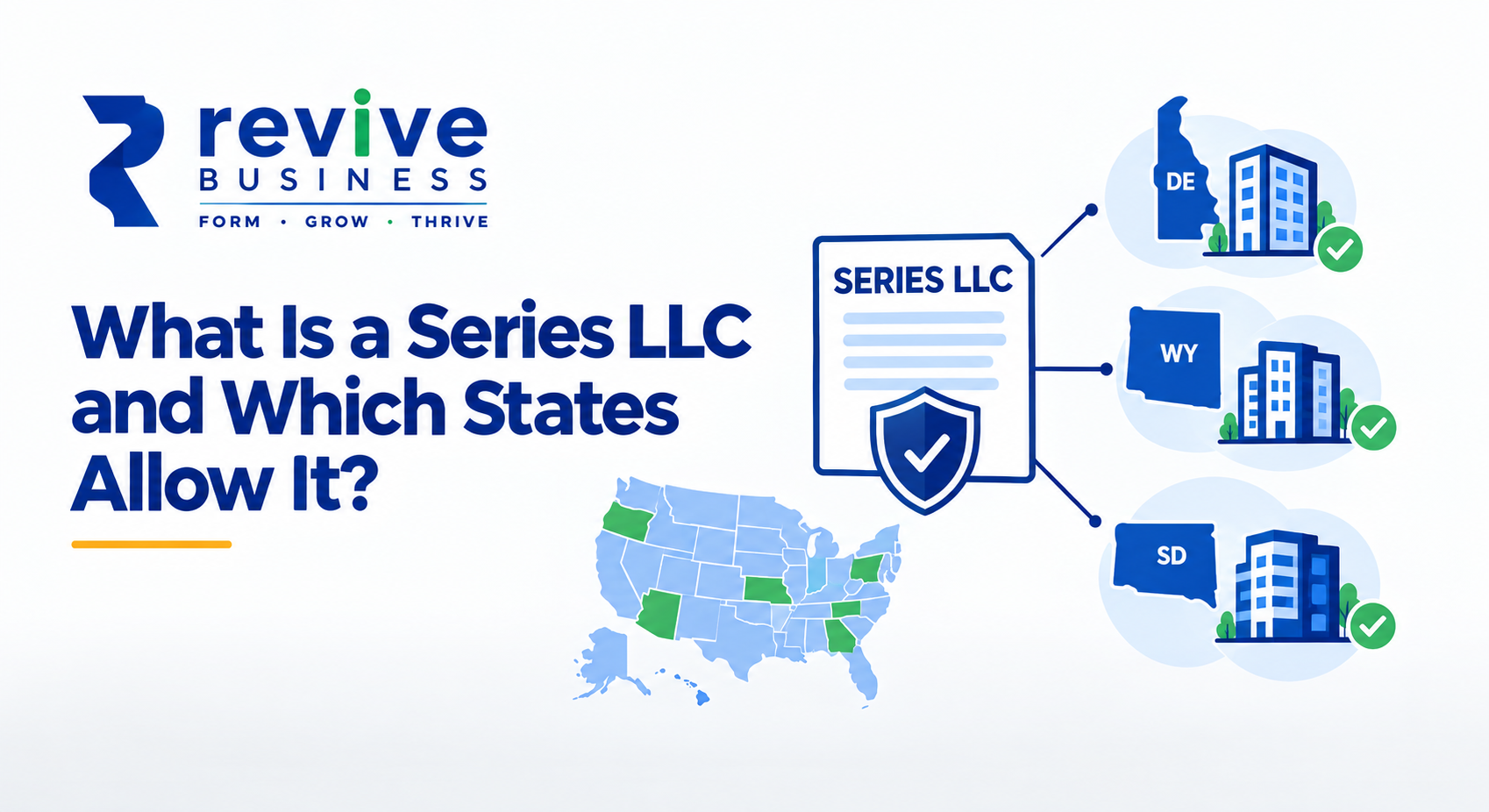
The Delaware and Wyoming Trap
Foreign qualification is the reason the popular advice to form your LLC in Delaware, Wyoming, or Nevada often works out badly for ordinary small businesses.
If you live and operate in Georgia but form your LLC in Wyoming because of its privacy protections and low fees, you have not avoided Georgia. You have added Wyoming. You will owe Wyoming formation fees, Wyoming annual reports, and a Wyoming registered agent, while also foreign qualifying in Georgia and paying Georgia's registration fee, Georgia's annual registration, and a Georgia registered agent. Two states, two sets of fees, two compliance calendars, one business.
The tax benefit people expect from this arrangement usually does not materialise either, because state income tax follows where you live and where the income is earned, not where a certificate was filed. For a business that genuinely operates across multiple states or holds assets in several, an out of state holding structure can make sense. For a single owner service business operating in one state, forming at home is almost always the cheaper and simpler answer.
Deciding Where to Form in the First Place
The cleanest way to avoid unnecessary foreign qualification costs is to think about where your business will actually operate before you file anything. If everything happens in one state, form there. If you already know you will have employees or a physical presence in two or three states, factor those registration and ongoing compliance costs into the plan from the beginning rather than discovering them a year in.
For business owners weighing expansion or unsure which state makes sense as a formation base, professional LLC formation services can handle both the original formation and any foreign qualification filings, along with registered agent coverage in each state where you need it. Handling both sides through one process keeps the compliance calendar in one place instead of scattered across separate state portals.
Frequently Asked Questions
Does foreign LLC mean an LLC owned by someone from another country?
No. Foreign in this context means out of state, not out of country. A Nevada LLC operating in Arizona is a foreign LLC in Arizona. Ownership by a non US citizen is a completely separate topic and does not make an LLC foreign in the registration sense.
Do I need to foreign qualify if I only sell online to customers in other states?
Usually not on its own. Shipping products into a state from outside it generally does not require foreign qualification. It may still create a sales tax obligation once you cross that state's economic nexus threshold. The picture changes if online sales are combined with in state inventory, employees, or local operations.
Does one remote employee really trigger registration?
In most states, yes. A single employee working regularly from within a state creates physical presence that states treat as strong evidence of transacting business. California, New York, Colorado, and New Jersey have particularly clear guidance on this point.
Can I use my existing registered agent for the new state?
Only if that agent has a physical address in the new state. The requirement is state specific, so a Texas registered agent cannot serve a Colorado registration. Many registered agent providers operate nationally and can cover multiple states under one account.
What if my LLC name is already taken in the new state?
You will generally need to register and operate under an assumed or fictitious name in that state. Your legal name in your home state does not change, but your public facing name in the new state may have to differ, which is worth knowing before building brand materials around a single name.
How many states can an LLC be foreign qualified in?
There is no limit. A single LLC can be qualified in every state where it does business. Each one carries its own filing fee, registered agent requirement, annual report, and tax registrations, so the practical constraint is cost and administrative capacity rather than any legal cap.
Getting It Right Before It Becomes Expensive
Foreign qualification is one of those requirements that stays invisible until it becomes a problem, and by then the back fees and penalties have usually been accruing for a while. The trigger points are predictable: a physical location, an employee, property, or sustained operations inside a state you have not registered in.
If you are planning to expand into a new state, hire remotely, or you suspect you may already be operating somewhere you should have registered, the team at Revive Business can review where your obligations sit and handle the filings needed to bring everything current.