LLC Taxed as an S Corp
Learn how an LLC can be taxed as an S Corp, including tax benefits, salary and distribution rules, election requirements, pros, cons, and common mistakes.
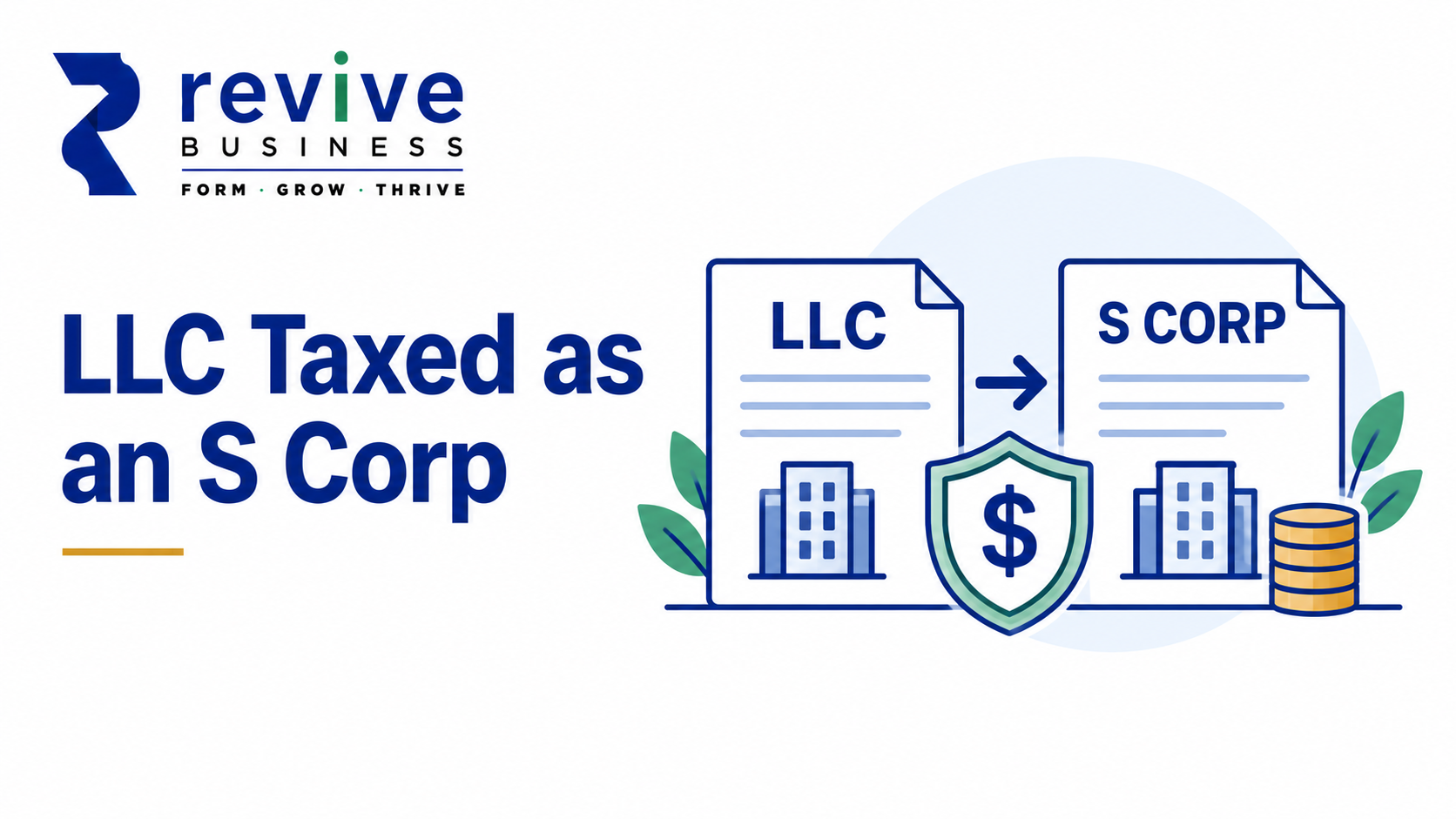
If you've done any research on business taxes at all, you've likely encountered the following question: Can an LLC be taxed as an S corp? The answer to this is a simple yes, but the reasoning behind that answer confuses many business owners, largely because "LLC" and "S corp" are used like competing choices when, in reality, they are not.
The key difference between the two terms here, which explains much of the confusion surrounding the matter, is the fact that an LLC is a business type created by state laws, whereas S corporation status is simply a tax choice made at the federal level. The two are not interchangeable. In fact, your LLC can retain its own legal standing and just change its taxation process entirely.
That process, however, may involve several additional steps, as well as several additional liabilities. Let's take a look at how it works and under what circumstances it can be beneficial.
What Does It Mean to Have an LLC Taxed as an S Corp?
LLC vs. S Corp: They Are Not the Same Thing
The above statement needs to be emphasized since this is where the confusion begins: The choice of S Corporation for your LLC does not make it a corporation. Your business structure is still an LLC according to the laws of your state.
How the Tax Treatment Changes
After electing S corporation status, the income will normally still flow to you as the owner, just as it would under a traditional LLC. However, now a new distinction has been added, that being your own compensation from payroll versus any further distribution of income. The distinction is actually the entire purpose of making the election, and the tax savings come from this.
How Does an LLC Elect S Corp Taxation?
Filing the S Corp Election
For this to be made official, a qualified LLC usually submits Form 2553 to the IRS. You must do this on time; otherwise, you might have to consider seeking late election relief, which is not always available. But before all this, your LLC should actually qualify for this status.
Getting the Business Set Up for S Corp Compliance
Once the election is made, the owner who participates in the operations of the business is supposed to be compensated with what is deemed as "reasonable compensation," which means that payroll should not simply be ignored. This involves having payroll withholding, employment taxes to file, and keeping more records than one would normally have for an LLC.
In cases where the LLC is not yet formed, this is normally the time to seek help from professionals. Having an LLC formation service will allow you to establish the business, giving you a clearer picture before making an S corporation election.
How Can an S Corp Election Affect Your Taxes?
Salary vs. Distributions
This is where the mechanics really start coming into play. Your salary, which you pay yourself, is taxed as if it were any other employee salary; it's taxed as wages and not exempt from payroll tax in the same way that you would be as an employee of someone else.
That being said, this doesn't mean that distributions are tax-free by default. They're considered income and therefore are taxed; however, it's simply done in a different manner than wages.
Why the Election May Reduce Employment Taxes
The savings opportunity is based on how you divide your pay into salary and distributions. Your savings opportunity will vary widely depending upon your own individual circumstances. There are no standard savings percentages that apply across the board regardless of your personal financial situation. In fact, no matter how hard those blog posts try to convince you otherwise, saving 15% instantly is simply not possible.
Who Should Consider Taxing an LLC as an S Corp?
When the Election May Make Sense
This tends to work best for business owners who have consistent, solid profits, are actively working in the business (so reasonable compensation is easy to justify), and are genuinely willing to take on the added administrative load that comes with payroll and additional filings.
When It May Not Be Worth It
On the flip side, if your income is unpredictable or still on the smaller side, the added costs of payroll processing and accounting support can end up outweighing whatever tax benefit you'd get. If you're looking for the simplest possible setup, standard LLC taxation might just be the better fit for now.
What Are the Pros and Cons of an LLC Taxed as an S Corp?
Potential advantages:
-
Possible reduction in self-employment/employment taxes on qualifying distributions
-
Pass-through taxation still applies at the federal level
-
Can become genuinely useful as profits grow
Potential drawbacks:
-
Payroll responsibilities you didn't have before
-
More tax filings and general accounting work
-
The reasonable compensation requirement, which isn't always straightforward to calculate
-
State tax treatment can vary, sometimes significantly
-
More recordkeeping overall compared to a standard LLC
None of this makes S corp taxation an automatic win. It's a trade-off, and whether it pays off depends on your specific situation.
What Are the Common Mistakes to Avoid?
Paying yourself too little. Some business owners will try to classify the bulk of their payments as dividends, while receiving an extremely small salary. This is something that the IRS actively hunts for and may cause you trouble in the future.
Ignoring payroll and state requirements. Not submitting your payroll reports, improper withholding, or failure to take into account how your state deals with S corporations can cause compliance issues.
Electing too early. Just because you have the option of making this election does not mean that you have to take it. For some LLCs that are just starting, it may not be worth it yet.
FAQs About an LLC Taxed as an S Corp
Can an LLC be taxed as an S corp?
Yes. An eligible LLC can generally make this election without changing its underlying legal structure as an LLC.
Does an LLC taxed as an S corp avoid all taxes?
No. Income tax still applies, wages are still subject to payroll taxes, and distributions remain taxable income, just treated differently for employment tax purposes.
Do I have to pay myself a salary?
Yes, generally. If you're actively working in the business, you're expected to receive reasonable compensation through payroll.
Is an S corp better than a regular LLC?
Not automatically. It depends on your profit level, how much administrative work you're prepared to take on, payroll costs, and how your state handles this kind of election.
Can a new LLC elect S corp status?
Yes, if it meets the eligibility requirements, but it's worth weighing the timing, the added responsibilities, and whether the benefits actually apply to your situation before making the switch.