Best Banks for Small Business LLCs
Discover the best banks for small business LLCs and learn how to compare fees, cash deposits, online banking, and transaction limits.
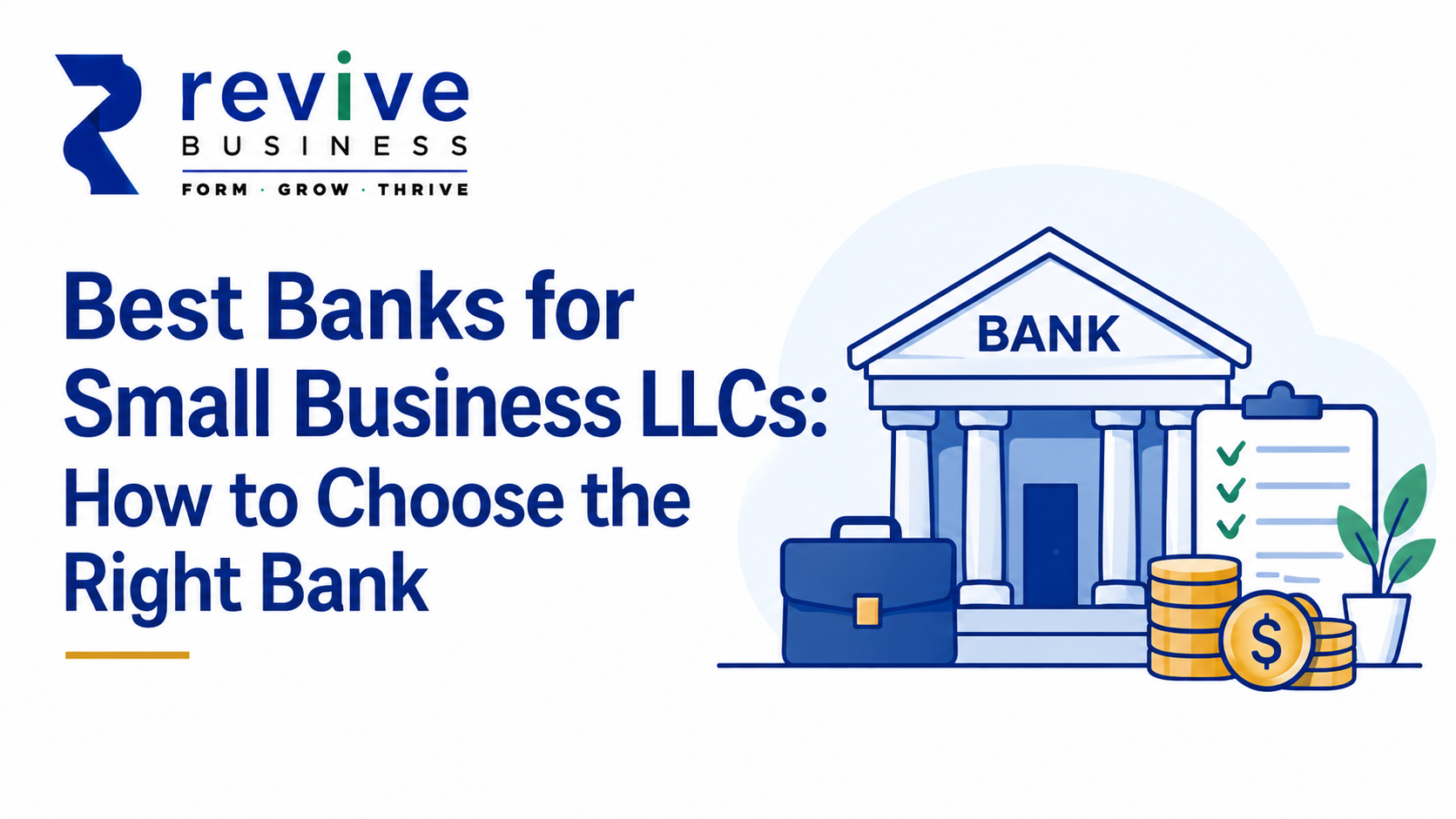
Choosing the right bank matters for new businesses. The best banks for small business LLCs are those that can help you handle your finances and maintain proper separation between business and personal transactions.
Choosing a bank for your LLC depends on your business’s specific needs, such as fees, account features, transaction volume, and access to banking services.
This guide explains what to look for in a business bank account, compares traditional and online banking, and helps you choose the right solution.
Why Does an LLC Need a Business Bank Account?
One of the first things many owners do after forming an LLC is open a dedicated business account.
LLC is a separate legal entity, and it is easier to manage the business when the finances are separate from your own personal finances. A business account allows you to make payments, pay bills, and keep track of all the transactions that take place under the name of your business.
What Are the Best Banks for Small Business LLCs?
The right bank for your LLC depends on your specific business needs. When comparing options, consider how each bank’s fees, account features, transaction limits, and services align with your company’s day-to-day operations.
For example, a brick-and-mortar business will have different considerations than an online business, such as requiring local branches and cheap cash deposits.
When doing your comparisons, consider whether the bank provides:
-
Low/affordable monthly fees
-
No/minimal account minimums
-
Easy cash deposits
-
Internet banking
-
Multi-user capabilities
-
Payment and invoice features
-
Accounting software compatibility
-
Business loans
-
Large number of ATMs or branches
The right bank for your LLC is going to depend on the particular needs of your business, such as the services required, fees paid, and transaction management.
Traditional Banks vs. Online Banks for LLCs
Traditional banks suit LLCs that need physical branches, regularly deposit cash, need in-person service, or want business loans, and can support you as your needs grow more complex.
Online banks and digital platforms suit businesses that primarily send and receive electronic payments. They often offer low or no monthly fees, digital account management, fast payments, expense tracking, and accounting integrations, though they may not suit businesses that handle cash regularly.
What Should You Look for in a Business Bank Account?
Before choosing a bank, look beyond the advertised monthly fee.
Monthly Fees: While some accounts come with a monthly fee, others offer it at no cost if certain balance criteria are fulfilled. Make sure to inquire about wire transfer fees, cash deposit fees, ATM withdrawals, transaction overage fees, and fees for international transactions.
Transaction Caps: Some accounts have caps on how many transactions are done for free in a month. If your LLC engages in frequent payment transactions, you need to make sure which bank charges for transaction cap overages.
Cash Deposit: When it comes to cash deposits, traditional banks are better equipped than online accounts. This means that a traditional bank with physical branches may be a better choice for businesses that regularly need to deposit cash than a digital-only bank.
Digital Features: Business banking has modern features like invoicing, bill payments, mobile deposits, expense management, virtual cards, and accounting integrations.
Banking Features by LLC Type
A single-member LLC usually needs low fees, simple account management, and convenient online and mobile banking, along with digital payments and expense tracking. Keeping transactions separate still makes financial management easier.
Multi-member LLCs often need more: several owners or employees may need fund access, so banks offering multiple user permissions and spending controls are valuable, including authorized users, multiple debit cards, spending limits, and accountant access.
How to Choose the Right Bank for Your LLC
Firstly, examine your business operations:
Is cash involved with my business? If yes, then account accessibility and cash deposits become critical.
What is my transaction volume per month? High transaction volume requires attention to transaction limits and costs.
Do I require financing for my business? Think about the banks that provide such services, like loans and overdrafts.
Do I need several people to operate the account? Accounts with several members can be better for multi-member LLCs.
Do I prefer online banking or bank branches? Your preference and business needs guide the right provider.
Common Mistakes to Avoid
-
The first is selecting a bank just because it has a low monthly fee while ignoring other costs such as cash deposits and transaction fees that could increase the total cost.
-
The second error involves mixing up personal and business accounts rather than separating them from the start.
-
The third is basing the selection of a bank just on immediate requirements without considering future growth.
When Should You Open a Business Bank Account?
Many LLC owners open a business bank account shortly after completing formation. Banks generally require business documentation and identification, though requirements vary by institution. If you are still establishing your business, LLC formation services can help you handle key steps such as preparing and filing formation documents, obtaining required information for your new business, and organizing the paperwork needed before moving on to next steps, including opening a business bank account.
Frequently Asked Questions
What is the best bank for a small business LLC?
There is no single best bank; it depends on branch access, cash deposits, fees, digital tools, and financing needs.
Does an LLC need a separate bank account?
A dedicated account keeps finances separate, making accounting easier.
Are online banks good for LLCs?
They work well for mostly electronic payments; cash-heavy businesses may prefer traditional banks.
What should I look for in an LLC business account?
Consider fees, transaction limits, cash deposits, ATM access, digital tools, and growth support.
Final Thoughts
Choosing the right banking institutions for small business LLCs should align with how your business handles money. Traditional banks work well for those who require physical branches, cash deposits, and general services, whereas online financial systems cater to digital companies requiring low costs and convenience.
When deciding which bank to use for your LLC, consider factors like fees per month, limitations on transactions, depositing cash, and others that might impact how you handle your company’s financial affairs.