What Happens to an LLC When the Owner Dies?
Learn what happens to an LLC when an owner dies in 2026. Discover single-member vs multi-member rules, Operating Agreement terms, and probate steps.
The majority of LLC owners pay attention to LLC formation and development; however, not many have a plan regarding what will happen to the business when the owner dies. The thing is that although there is great benefit in LLC formation, it is essential to think about what will happen with the business once the owner passes away. Most entrepreneurs, especially founders of the business, use LLC formation services to create an LLC initially. However, this is just the first step; planning the future of the business is just as important.
So, what happens to the LLC after the owner passes away? Everything depends on the number of members, operating agreements, and laws of the LLC formation state, as well as on the way the deceased owner's estate is organized.
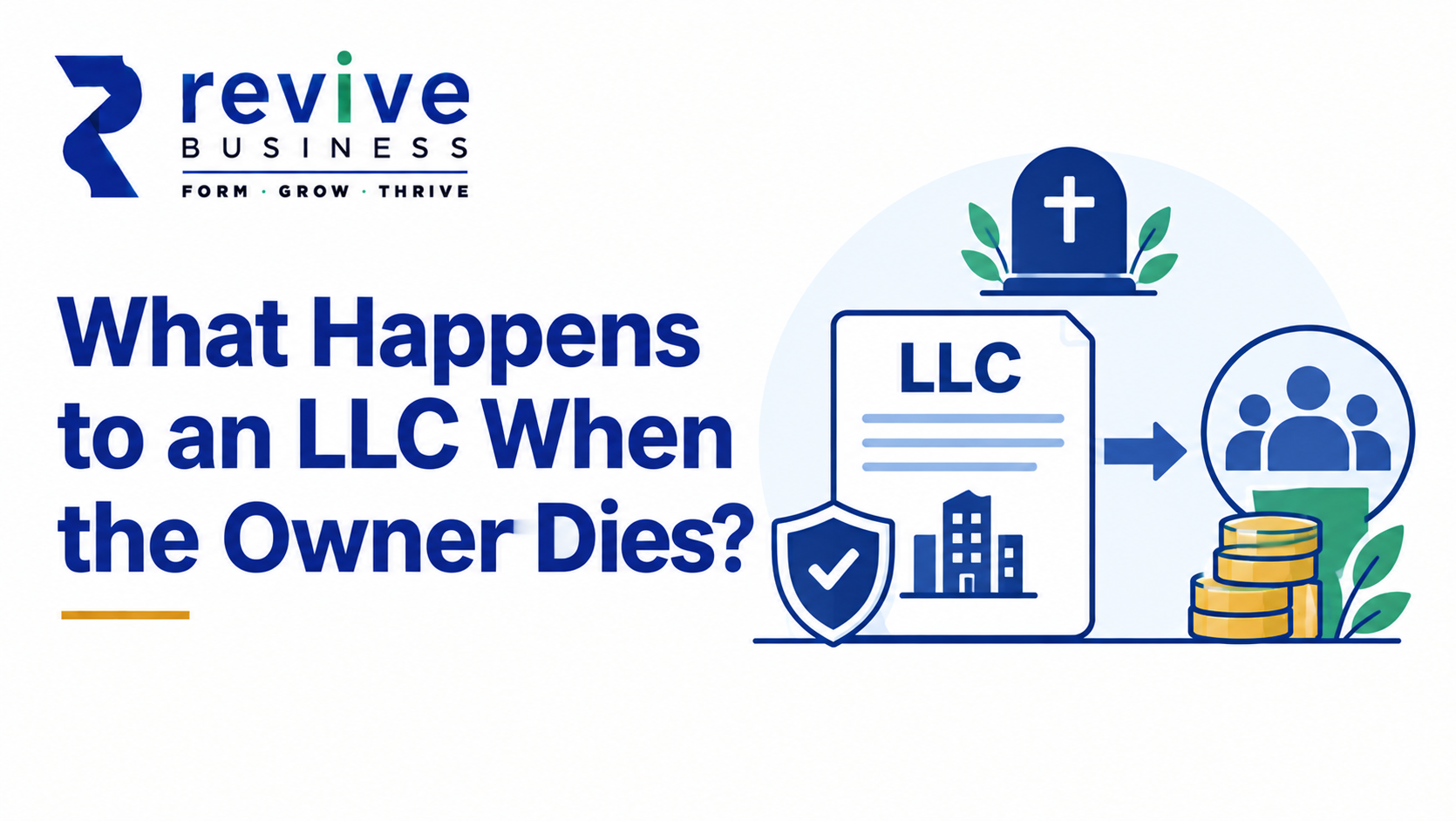
An LLC does not necessarily dissolve when its owner dies. In most cases, the ownership share of the deceased member goes to the heirs or beneficiaries, while the business continues to operate.
Single-Member LLCs
In a single-member LLC, the interest of the single owner normally becomes part of his/her estate on their death. The ownership of this interest is determined through a will, trust, or the state’s laws of intestacy.
Whether an LLC will survive the death of one of its owners will be dependent on the state law in which the LLC is organized and on the terms of the LLC’s operating agreement. For instance, in California, a general rule provides that an LLC would normally dissolve in the case of a single-member LLC if there are no members remaining, although there might be some exceptions regarding transferring interests of a deceased member to their heirs or successors. In Delaware, a general rule provides that the death of a member does not result in dissolution of the LLC; therefore, it will remain in existence as is.
Multi-Member LLCs
In a multi-member LLC, when one member dies. there is no need for any change in the operation of the company because the rest of the members can go on doing what they were doing before the death.
However, it is important to consider what happens with the interest of the member who died. With a carefully crafted operating agreement, there should be provisions to cover how the interest of the deceased member can be taken care of.
Why the Operating Agreement Matters
An operating agreement is the most vital tool for determining the course of action to take after the death of a partner. It may include guidelines that cover:
-
Transfer of ownership
-
Acceptance of successor
-
Buying the interest of the deceased partner
-
Dissolving the company if necessary
It can also specify ownership percentage, management responsibilities, and voting procedure. Incorporating the death provisions will lessen the level of confusion that the remaining partners and family might face.
No Operating Agreement? Here's What Happens
When an LLC doesn't have an operating agreement, or when the agreement fails to consider the issue of death, state statutes apply, and these vary considerably between states.
The deceased's interest will usually be dealt with via probate, where the executor or personal representative handles the estate's assets during the course of administration. This may involve the business continuing, a transfer of the interest, a buy-out by the other members, or closing of the business.
That is precisely what makes it important to plan for succession from day one.
Can an LLC Pass to an Heir?
Yes, an LLC ownership interest can be passed on to an heir or a beneficiary, but this is not something that always happens on its own. It all depends on a combination of factors like the will, trust, the operating agreement, and state laws.
It is important to know the difference between the economic interest and the full membership interest. An heir may get an economic interest without becoming a member of the LLC.
How LLC Owners Can Prepare
-
Establish an updated operating agreement that deals with death, disability, and ownership transfer issues.
-
Coordinate your estate planning by incorporating your interests as the owner of the LLC in your will or trust.
-
Choose a successor who can take control or take over the business when necessary.
-
Establish buy-sell agreements that define how a deceased member’s interest is valued and transferred.
-
Keep your business documentation organized; this includes ownership papers, contract agreements, and tax documents.
Start Succession Planning at Formation
The process becomes much simpler if it is planned from day one. New LLC owners need to consider more than just registering the formation of their business; they need to plan for succession during significant life events such as death. It would benefit new business owners greatly to consult an attorney and a tax advisor.
Frequently Asked Questions
Does an LLC automatically dissolve when the owner dies?
Not necessarily. It depends on the operating agreement, ownership structure, and the law of the state where the LLC was formed.
Who inherits an LLC when the owner dies?
The interest typically passes according to a will, trust, or state inheritance law—but inheriting ownership doesn't guarantee automatic management or membership rights.
Can a family member take over an LLC after the owner's death?
Potentially, depending on the operating agreement, estate plan, and state law, and whether extra steps are required to formalize the transition.
What happens to a single-member LLC after death?
The interest generally becomes part of the estate. Depending on state law and governing documents, the company may continue under a successor or require dissolution.
Can an LLC continue without its original owner?
Yes, in many cases, depending on the operating agreement, ownership structure, and succession provisions in place.
Final Thoughts
There is no simple solution in regard to the consequences that the death of the owner can bring upon an LLC. Having a well-crafted operating agreement, a properly designed estate plan, and a succession plan makes the situation much more predictable for surviving relatives and partners. Since LLC laws are regulated differently in different states, one should examine the necessary documents in advance of a possible tragedy.