Can Two LLCs Have the Same Name?
Can two LLCs have the same name? Learn how state registration, trademarks, DBAs, and naming rules affect LLC name availability.
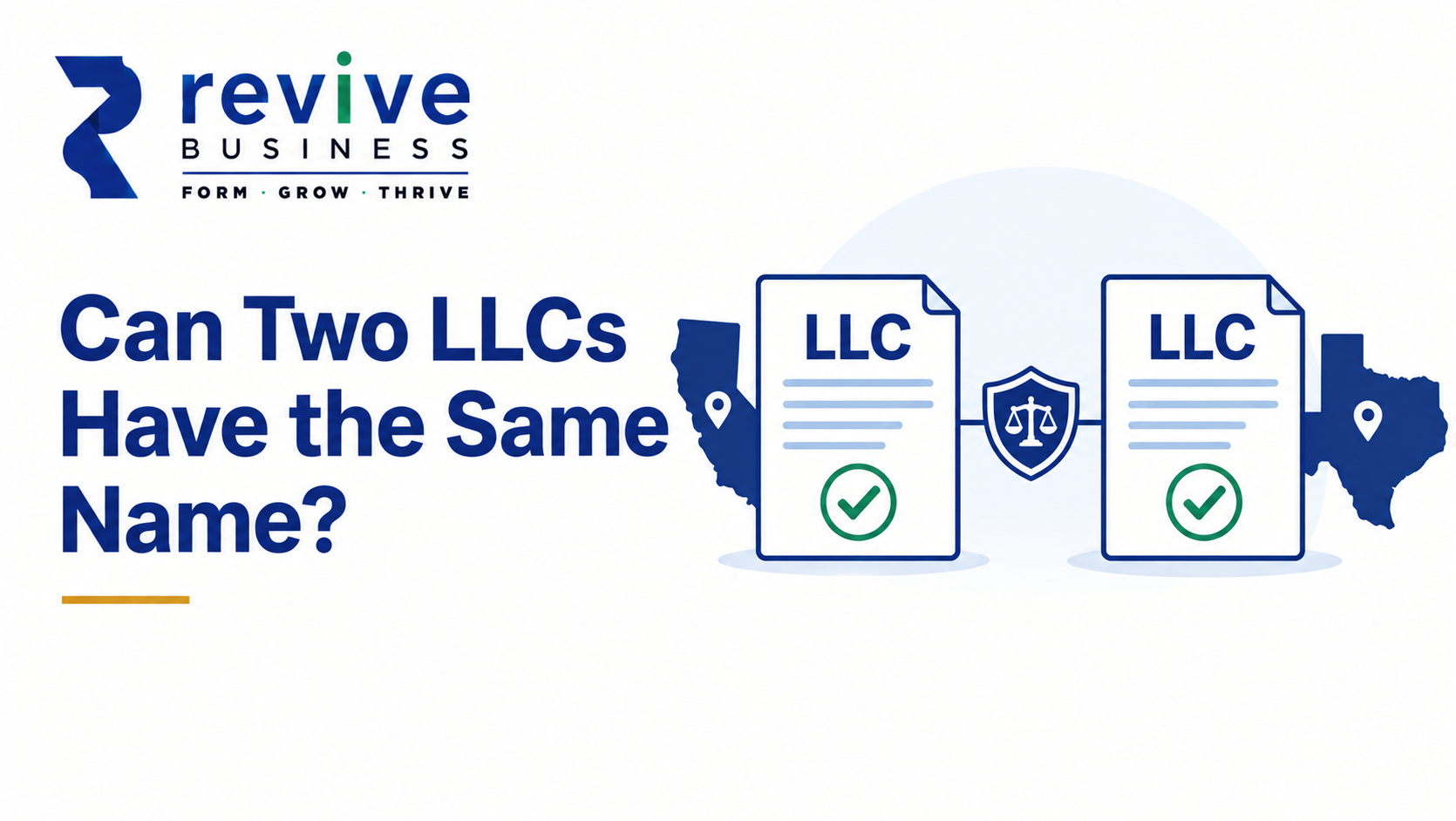
One of the most common questions during the LLC naming process is whether two companies can register the same name. Generally, two LLCs can share the same name if they are registered in different states. However, within the same state, an identical or confusingly similar name will typically be rejected.
Since LLC names are controlled by the states individually, a name that cannot be used in one state could easily be used in another because all the states keep their own business records. Nonetheless, LLC filing will not guarantee you protection against trademarks across the country.
Can Two LLCs Have the Same Name in Different States?
Yes. It is possible for two companies to use the same name when the two companies have LLC formations in different states. An LLC named "Blue River Consulting LLC" could exist in Texas and Colorado, provided all the criteria for using such a name in each particular state have been fulfilled.
This is because the process of formation of LLCs is governed by each particular state, not the nation as a whole. A state registration office usually checks whether the name being proposed is unique in relation to other names registered in the state.
Can Two LLCs Have the Same Name in the Same State?
Generally, no. The name needs to be distinguishable from any names already registered for other businesses, although what constitutes "distinguishable" is determined by each state.
Typically, changes in punctuation, capitalization, or the LLC designation do not create sufficient differences in the name for it to be distinguishable. LLC names may even be checked against corporate names, partnership names, and fictitious business names in some states.
Due to different requirements across states, it is imperative that one check the requirements in his or her own state of registration. For example, Florida requires that an LLC name be distinguishable and include a designator.
Does LLC Registration Protect Your Name Nationwide?
No. It’s not true that registration of an LLC provides you with nationwide trademark protection. This is because registration at a state level only provides you with an official status within that particular state, but this will not guarantee that some other company won’t use a similar name elsewhere.
It’s vital for those businesses that plan on working at a national level, expanding into other states, or creating their brand. Before adopting a certain name, you should search the federal trademark register for similar trademarks.
What If Another Business Has the Same Name?
One business doesn't necessarily infringe on the law simply by its very nature. One must consider the geographic location of each company as well as their products or services and whether there are any trademarks involved.
It may be possible for two completely independent companies to use similar names if they are doing business in separate markets. Issues will typically occur if it is possible for consumers to confuse the two.
What About DBAs and Trade Names?
The DBA, also referred to as a fictitious or trade name, is different from the legal name of the LLC. The LLC can conduct business under another business name depending on state laws.
Furthermore, a DBA doesn't provide nationwide rights – and hence it will be important to search through relevant databases for a DBA name.
How to Check if an LLC Name Is Available
Make sure to take note of the following before filing:
-
Look up your state's listing of business entities.
-
Look at alternative names rather than only identical names.
-
Perform a search of federal trademarks.
-
Search the Internet for businesses with the name.
-
Check the availability of domain names and major social media handles.
-
Examine any DBAs and assumed names.
-
Understand what kinds of words are restricted by your state and mandatory in LLCs.
-
Think about whether you will want to enter other states in the future.
If you'd like help managing the filing process, professional LLC formation services can simplify the administrative steps and help organize the information required for formation. Trademark and broader brand considerations should still be evaluated separately.
Can You Reserve an LLC Name?
There are states where the entrepreneur may reserve the chosen business name even before forming the LLC for a specific period. It is important to understand that there will be differences between various states in relation to the process of reserving a name, how long the period will last, and so on.
Frequently Asked Questions
Can two LLCs have the same name?
Potentially, yes, if they're registered in different states and each satisfies that state's rules. Within the same state, an identical or confusingly similar name will generally be rejected.
Can I use a business name that exists in another state?
Probably, but make sure to check for trademarks and other legal considerations first, particularly if your business will be operating online or between states.
Does forming an LLC trademark the business name?
No. Registering an LLC and getting trademark rights are two different things. Just because you have registered your LLC does not mean you have trademark rights throughout the country.
What happens if my LLC name is rejected?
You'll typically need to choose a different name or modify your proposed one so it meets the state's distinguishability requirements, which vary by jurisdiction.
Should I check trademarks before forming an LLC?
Yes. A state database search only covers part of the process — a trademark search can surface conflicts that state-level LLC approval won't reveal.
Can I change my LLC name later?
In many states, yes, usually by filing an amendment and paying a fee. You may also need to update licenses, contracts, banking records, tax information, and branding.
Final Thoughts
Thus, is it possible for two LLCs to have the same name? Primarily, it all depends on where the two companies are incorporated and whether the proposed name is not in conflict with any other rights.
The most sensible step would be to ensure that state availability is checked, trademarks are checked, and there is potential for growth before coming up with the business name. The unique name will prevent confusion and possible rebranding in the future.
Since different jurisdictions have different regulations, it would be prudent to seek advice from a licensed lawyer regarding the chosen name.